

At Downhouse Vintage, Nothing Is Gendered—From the Owners to the Clothing - Willamette Week |
| At Downhouse Vintage, Nothing Is Gendered—From the Owners to the Clothing - Willamette Week Posted: 11 Jun 2019 04:47 PM PDT If you believe your clothes explain you in ways you have trouble articulating, consider letting Downhouse handle your closet. An eclectic online vintage shop, Downhouse challenges gender categorizations within fashion and employs all-queer models—it's also completely queer-owned. "We know because we are queer that it can be intimidating and uncomfortable shopping for clothing, and that a lot of stores are explicitly for 'her' and 'him,'" says Downhouse founder Logan Rhodes. "Because the nature of fashion is and has been so gendered and exclusive of queer folks, we hope that some of what we are doing can be a safe space and can counteract that." Downhouse's aesthetic runs across multiple eras, namely the period between the 1970s and early 2000s, gravitating toward bold colors, natural fibers and flowy forms. On its website, you'll find everything from a '90s lavender silk wrap top to a puff-sleeve rainbow-striped blouse from the '80s. Rhodes previously owned and operated a vintage clothing shop in rural Georgia, which they quit suddenly in an existential panic. It wasn't until years later that they returned to their passion, pairing with Annie Grapek, whom Rhodes met through a mutual friend and became roommates with in Atlanta. Together, they sourced and sold clothes on Etsy and at pop-up events. Initially formed as a hobby, Downhouse soon blossomed into a lucrative entrepreneurship. Six months in, its founding duo sat down and reworked their marketing strategy to turn the business from a side hustle into a full-time gig. A year later, Downhouse's gross sales tripled, enabling it to bring on a third employee. In June 2018, Downhouse migrated to Portland, the country's second-most queer metropolitan area. "We packed up everything we owned––including more than 500 pieces of vintage clothing––and drove across the country to a city that we had never been to in search of authenticity," Rhodes says. "Since coming out as trans, and now living in a city where I'm not made to feel like an 'other' everywhere I go, there has been such a radical experience in personal growth." Rhodes and Grapek made another jump shortly before the move—each came out as nonbinary. "We were searching for a larger LGBTQIA community, and a city where trans and nonbinary folks are more visible," says Rhodes, reflecting on his friendship with Grapek. "I can honestly say that who the two of us are now is 1,000 percent different than who we were when we met. It isn't easy to be able to grow alongside someone else. That alone is a testament to how much we love each other. They are my family." While some assume a Portland online vintage shop picks through the Bins for its supplies, the Downhouse crew entertain a national treasure hunt. "We may be flying to Florida for an estate sale; other times, we may walk to a Goodwill down the street. There's no routine," says Rhodes. "It's an adventure, and that's what I like most about what we do." Blaringly anti-Trump and pro-LGBTQIA, Downhouse has witnessed the ugly sides of operating a queer-focused business. Rhodes says they struggle with sourcing in rural areas as a "visibly queer person," and both they and Grapek have met resistance when attempting to use fitting rooms and restrooms outside Portland's progressive borders. If anything, though, discrimination elevates Downhouse's inclusivity. "We choose to be very outspoken about our own identities," Rhodes says, "and to use only queer models to prevent any queer person from ever feeling excluded, intimidated, or uncomfortable in shopping with us." MORE: Shop Downhouse at shopdownhouse.com. Downhouse openly recruits nonbinary and queer models. If you're interested in working with Rhodes and Grapek, reach out through their website or Instagram @downhouse_.  |
| Posted: 11 Jun 2019 02:03 AM PDT 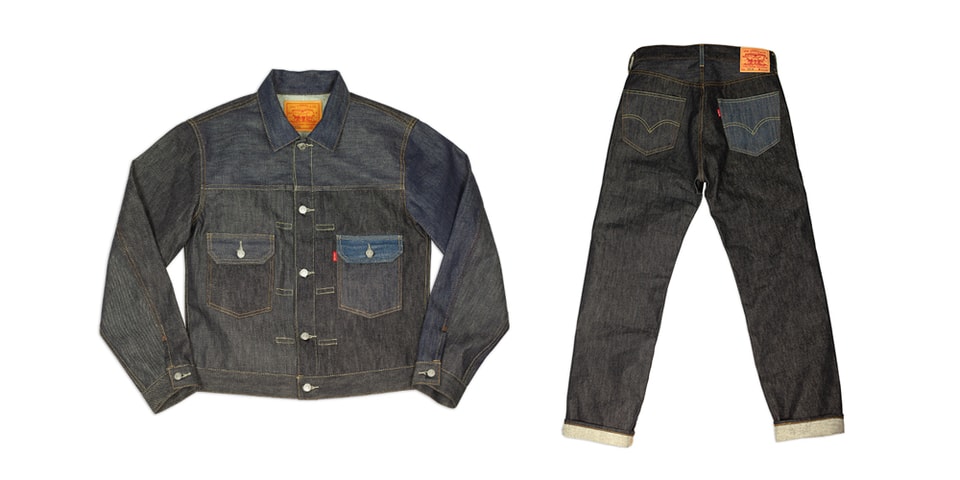 At the turn of 2018, one of the US's last and oldest selvedge denim makers closed its doors, ending the longest-standing partnership in American selvedge denim history. Cone Mills White Oak shut down on December 31, 2017, marking the end of its 112-year operation and its century-long partnership with Levi's. To commemorate this legendary denim mill, Levi's Vintage Clothing has created two unique commemorative pieces, consisting of a 1955 Levi's 501 jean and a 1953 Type II trucker jacket. Both garments are made from six different Shrink-to-Fit fabrics that span across the 100-year-long shared history between the two companies. This collection will be the first and last time these six different fabrics — recreated by Cone Mills White Oak — join together in one garment. As limited edition items, both the jeans and the trucker jacket will come encased in a commemorative box constructed of Carolinian White Oak wood. "It's a way to say thank you for all our beautiful fabrics," says Levi's Vintage Clothing Senior Designer Paul O'Neill, "and to celebrate our long history together." These two farewell pieces from Levi's Vintage Clothing and Cone Mills White Oak are now available over at Hudson's Hill, Unionmade and Canoe Club, retailing at $599 USD per piece. There's only 150 of each made, so vintage denim enthusiasts should be sure to act fast. Elsewhere in fashion, Prada joins the chest rig hype with its own nylon harness bag.  |
| You are subscribed to email updates from "vintage clothing" - Google News. To stop receiving these emails, you may unsubscribe now. | Email delivery powered by Google |
| Google, 1600 Amphitheatre Parkway, Mountain View, CA 94043, United States | |








0 Yorumlar